
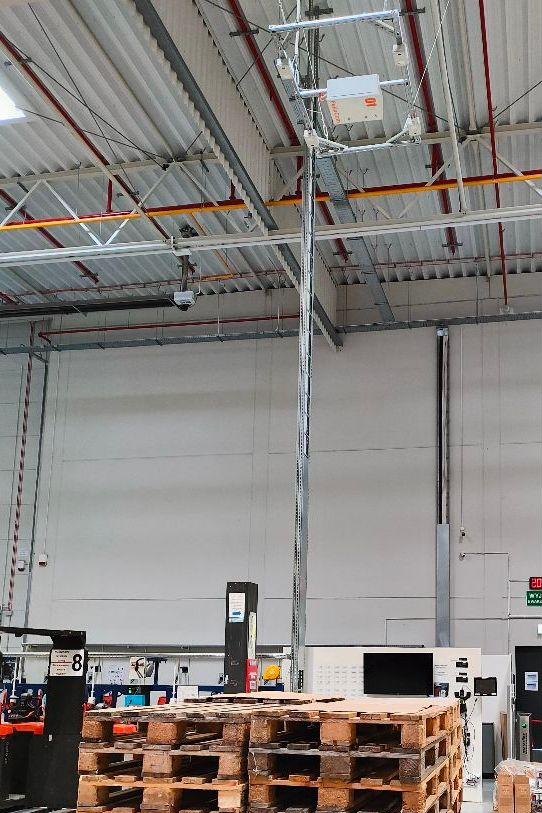
Photo: sensor on the structure above a stack, portrait 3:4
01
Sensor above the stack
Measures the distance to the top pallet. One sensor per stack, up to eight per station, mounted on the hall structure above the station.
A sensor above the station measures stack height and converts it to a pallet count. The web panel and signal tower show shortages and overflows.
Mounting 2500 mm, pallet 140 mm, minimum 3, warning up to 5, capacity 14.
Figures from a working site, not from a datasheet — with one exception: the range of 1–8 stacks per controller is what the system can do, the rest is the state of that installation. We do not name the client; references are shared directly on request.
Photos from a live installation. The full-size panel is further down.
Measures the distance to the top pallet. One sensor per stack, up to eight per station, mounted on the hall structure above the station.
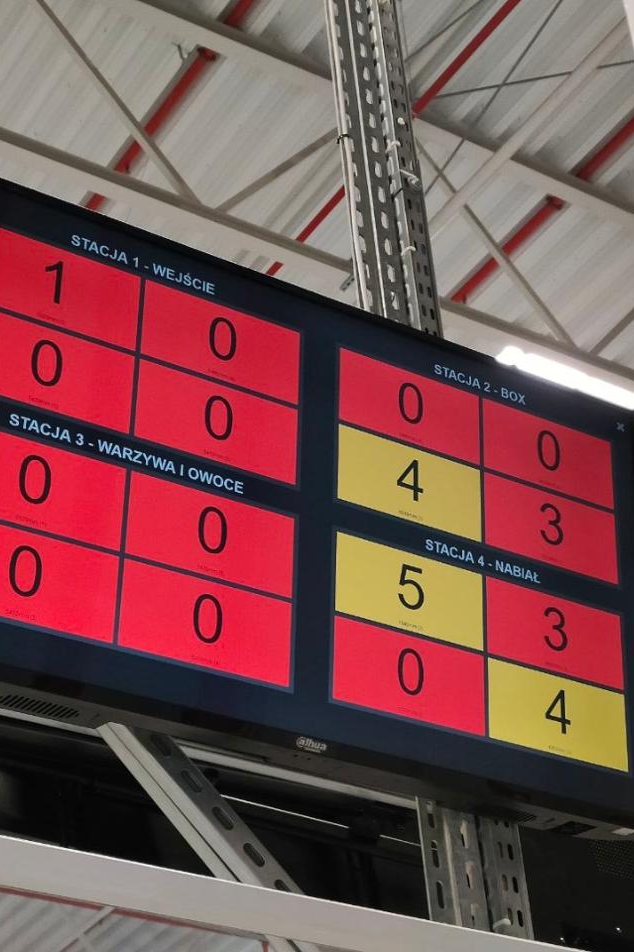
A monitor under the ceiling shows the panel where the forklifts work. Tile colour reads from the far end of the aisle, no walk to a computer.
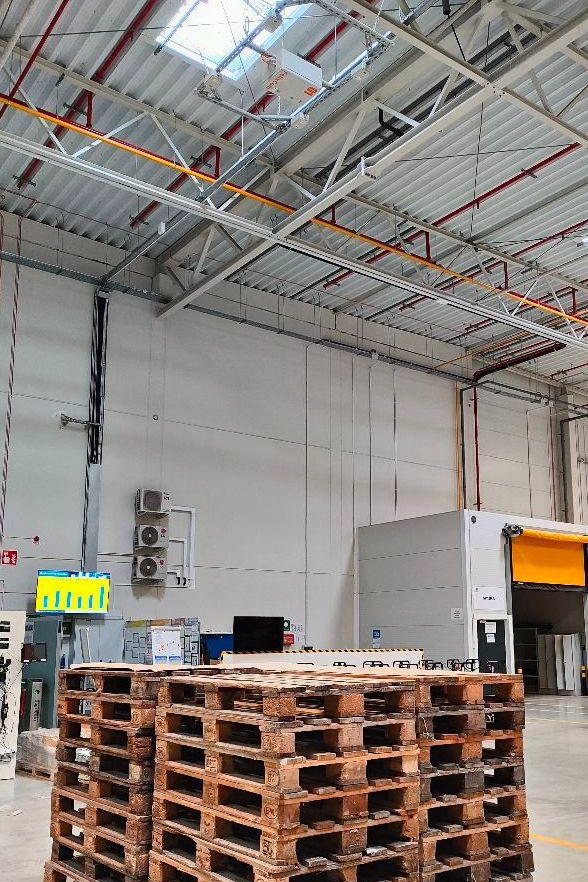
Sensor high above the stack, pallets below it. No gates, no scanning: the forklift drops and picks pallets as it always did.
Collects sensor readings, filters noise against pallet thickness and sends the measurement to the server with signal strength and operating temperature.
Red, yellow and green lamp plus a siren. Polls the server and sets colour, flashing mode and beep count on its own. A button silences the alarm for a set time.
An application on a computer in the plant network. Tiles, bars or squares, sections, quantity thresholds, user roles and a JSON API for WMS systems.
The scene below replays the full cycle: measure, convert, evaluate thresholds, signal. Pause it and step through.
The same state in three views. Pick the layout that reads from the far end of the hall.
Tiles with pallet counts, stack height bars or squares. The view is remembered per user.
Stations grouped into sections in a set order. Separate minimum and full-stack thresholds for every sensor.
A schedule for switching the siren on and off. A button in the hall silences the alarm for a configured time.
Every reading stored in the database. Station state available through a JSON API for WMS and ERP systems.
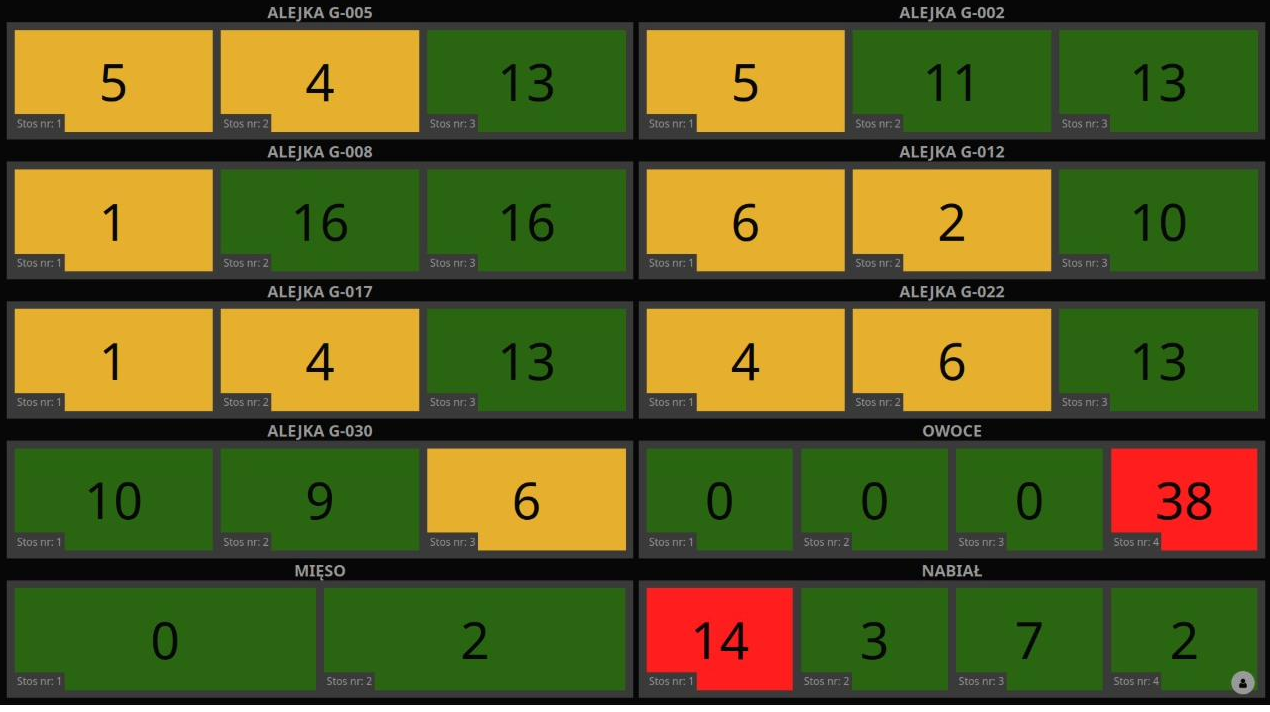
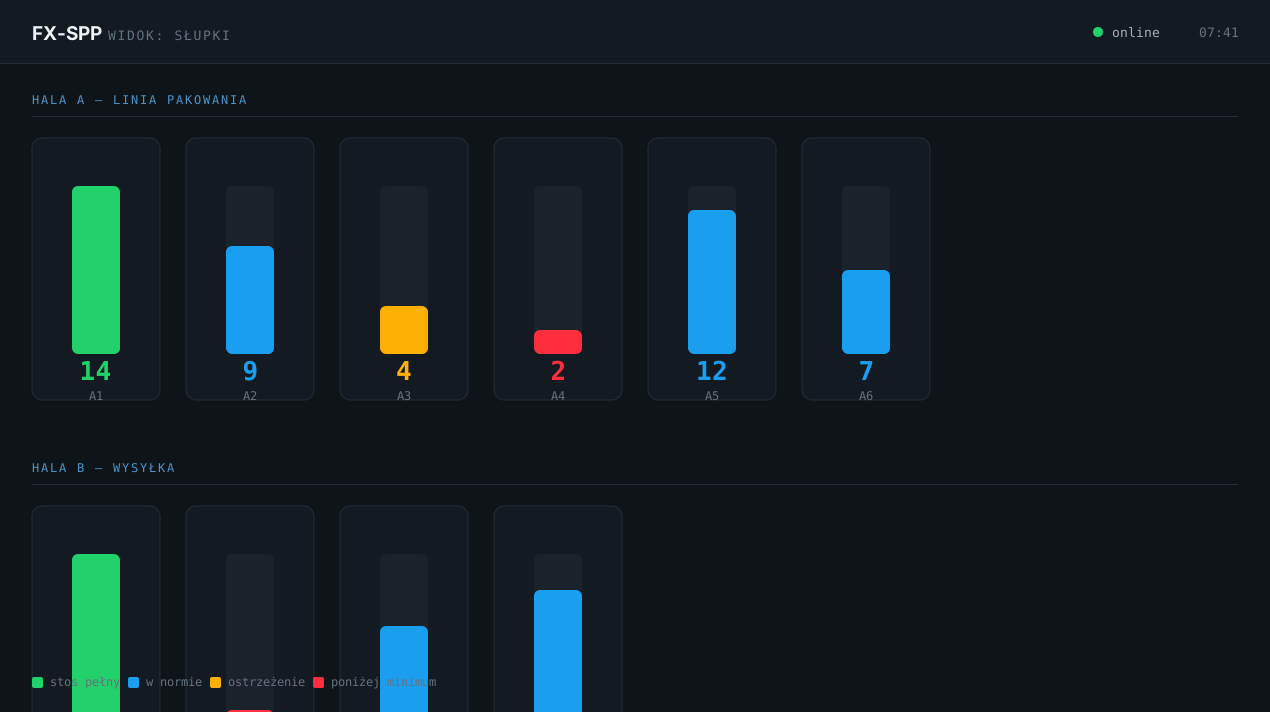
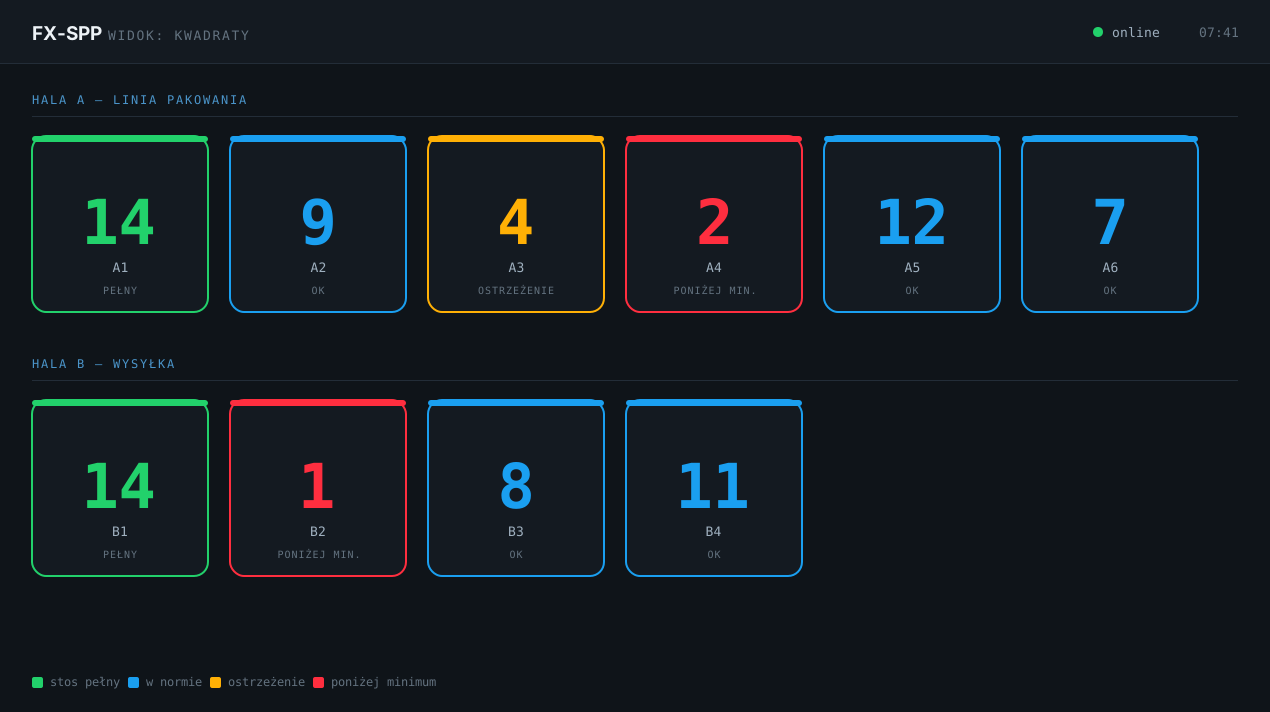
Example views showing the same stock in three layouts. The panel is designed for each specific warehouse — section layout, station names, thresholds and colours are set the way they read on that particular floor. What you see here illustrates the principle, not a finished client screen.
Defaults from live installations. Every threshold and dimension is configured per stack.
Nominal value, entered per sensor at commissioning.
Default. For EUR pallets enter 144 mm, for other types their actual height.
Default stack capacity. The full-stack threshold is set separately.
One controller handles up to eight adjacent stacks.
Below minimum: red tile and siren. Just above minimum: yellow warning. All three thresholds are set per sensor.
No reading for more than 15 minutes flags the stack as late.
Signal strength and controller temperature are stored with the distance.
PHP and MySQL on a computer in the plant network. No cloud, no subscription.
Matched to the station: range to the mounting height, beam angle to the stack width, enclosure rating to the conditions on the floor. The software is not tied to one model — it handles different sensors, so replacing or upgrading one changes nothing in the panel or the database.
Designed and built by FelixCom, in an industrial enclosure. Power and the communication link are matched to the installation — where a cable cannot be run, the station works wirelessly. The firmware and the protocol are ours, so extending the system does not depend on somebody else's product lifecycle or availability.
We measure the stations, the structure height and agree the pallet types.
Sensors, controllers and the signal tower in the hall. The server on a computer in the plant network.
Sections, minimum and full-stack thresholds, siren schedule, user accounts.
Calibration of every sensor on an empty and a full stack. Team training.
A logistics centre in Poland. 12 measuring stations under sensors. Running since July 2023, extended with more stations in July 2025, same server, same measurement database.
A sensor above the stack measures the distance to the top pallet. The controller subtracts this distance from the mounting height and divides by pallet thickness. The result is the number of pallets in the stack.
Yes. Pallet thickness is entered separately for each sensor, so one station can hold stacks of different pallet types.
First a warning: tile and lamp turn yellow as the stack approaches the minimum. Below minimum the tile turns red, the tower lights its red lamp and beeps. Thresholds, beep count, flashing mode and quiet hours are set in the panel.
No. The server runs on a computer in the local network, sensors and the tower connect to it over LAN. The internet is not needed for operation.
Station state is available through a JSON API. Integration with a specific WMS or ERP is quoted after analysis.
Tell us how many pallet stations you have and which pallets you use. We reply within a working day.